Tell us about Obsidian. What makes your approach different from traditional production companies?
We're not a traditional VFX company, and we’re not a traditional production company – Obsidian is a director-led creative studio built by artists, for artists. We blend live-action craft with digital production, and AI/CG workflows to help directors and brands tell more vivid, emotionally resonant stories. We've defined workflows specifically to deliver what exists in the minds of directors and creators. Our approach centers on compact, multidisciplinary units of directors, artists, editors and technologists working together in real-time. That structure lets creative ideas stay intact from the first board to the final frame. Around 10-15 people work on any given production, and we work across a variety of tools, both AI and traditional.
Why did you decide to build Obsidian around AI tools?
Obsidian wasn't built from a plan. It evolved from necessity and opportunity. In early 2023 I was leading a high-volume content studio, and many team members were feeling the limits of traditional production pipelines. They began exploring new ways to bring more immediacy and collaboration into the creative process. That realization sparked inspiration.
When Wes and I met in May 2024, he was already experimenting with AI in production [for Under Armour]. Our conversations quickly turned to how directors and artists could stay close by working in smaller units that keep story and art direction as the center. That foundation became the idea for Obsidian – a studio that revolved around new workflows and tools that shortened the path from idea to production. Just a few weeks after this, we were contracted to deliver a big project, on a four-week timeline with limited budget, and that was where these workflows really came to life. We were able to see and experience the magic that happens when tools serve the mind of a director who knows exactly what they’re looking for, and can create it on the spot.
How did you structure these new workflows? Walk us through the process.
We actually mimic the classical production process. We start with pre-production – that's when we define our casting, our digital portraits, our characters, all the wardrobes and props.
When we get into the actual production, every single shot is defined, and we create the images and edit on the spot. The director can feel and understand the film, while using AI for the iteration process, which is a creative enhancer. Then we go into post-production, much like a classical pipeline – VFX, color, sound. But the key difference is how much closer we can now keep directors and artists to the work. The process moves faster with AI, without compromising taste or emotion.
What role does Runway play in your workflow specifically?
For us, Runway is best in class for consistency and character work. When we need characters maintained across multiple shots, when we need that level of control, Runway is where we go.
Our Longchamp project is a perfect example. The client challenged us not to do just one character – they wanted five different characters, all made with AI, with complete consistency. We developed them one after the other using Runway, and used them across the entire film.
Tell us more about how the Longchamp film came together.
The Longchamp piece was a creative dream. We went to Longchamp with Anton Tammi, an amazing director who worked as the creative director on this. It's truly his mind and his vision that we brought to life in the film, alongside director Audrey Mascina and our Head of Story, Marc Vena. We gave ourselves a challenge: how do we build a piece of creative work entirely from generative AI, and how far can we push the tools to create something truly unbelievable to support a story that still feels handmade?
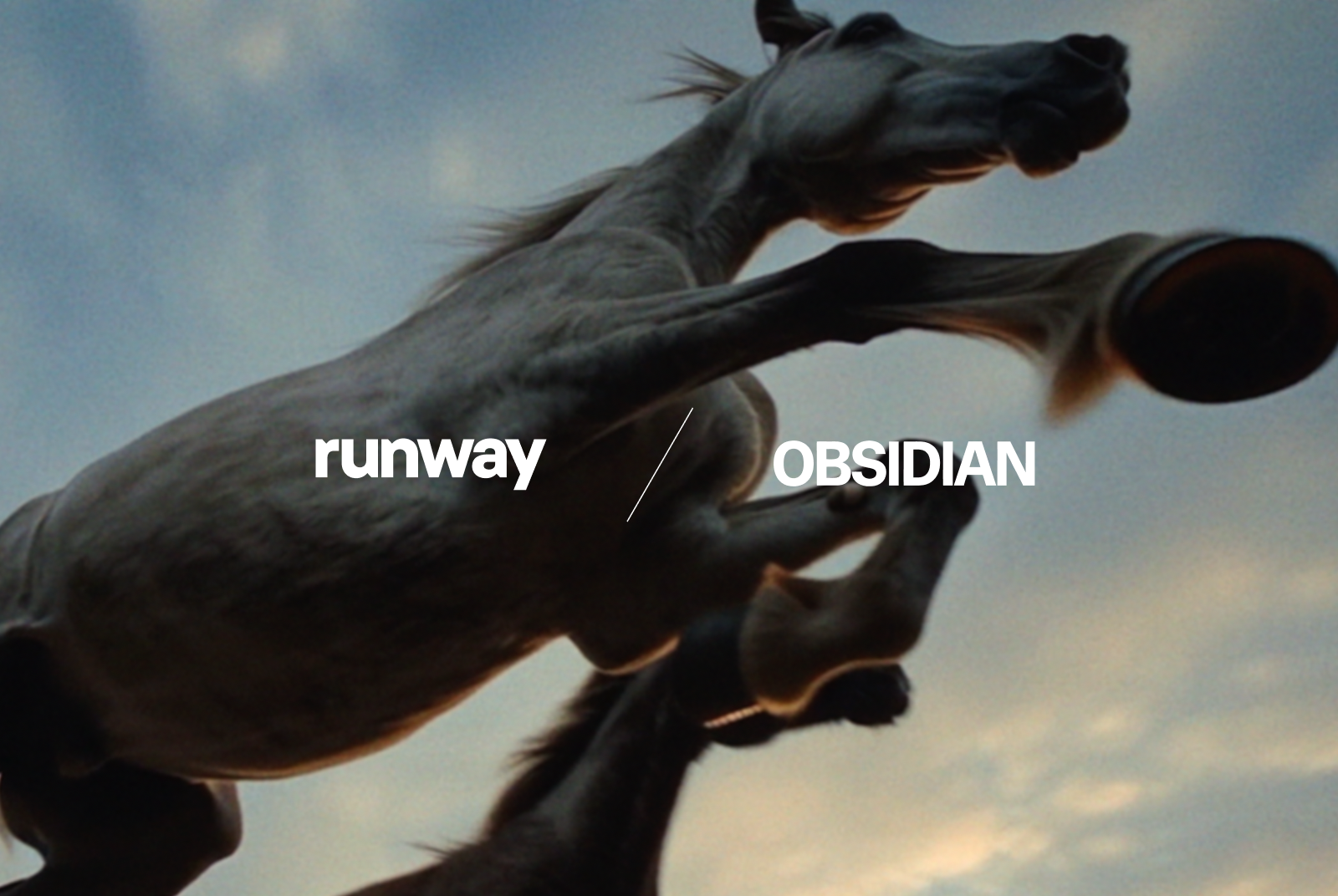
The end result is an almost mystical film where we imagined horses on the rooftops of a surreal Paris, with greenery and horse tracks taking over the entire city. From pitch to delivery was about seven months – understanding the vision, pushing boundaries, working collaboratively with the Longchamp team on what the red line of the story should be. The project was a true study in balance: pushing boundaries while staying authentic to the brand and to Anton’s artistic intent.
You’ve developed a creative partnership with Ron Howard's Imagine Entertainment. How did that come together?
The first project we signed after incorporation was with Imagine Entertainment. That says something about where this technology can go when it's in service of true storytelling, and it validates everything we'd been building. Together, we’re exploring how our storyboard artists, editors and AI specialists can serve both Hollywood and global brands. We start with hand-drawn storyboards, then move to AI-enabled iteration and high-end VFX. Our work with Imagine covers development, previsualization and post-production, and we have several exciting projects in the works. We’re grateful to Ron Howard, Brian Grazer, Justin Wilkes, and the Imagine Entertainment team for their trust and openness.The partnership reflects our shared belief that technology should expand what’s possible for storytellers, and not replace it.
What advice would you give to other directors or agencies thinking about adopting these workflows?
First, it's a shift of mindset. You need curiosity. The goal isn’t to replace how you work, but to widen the creative space.
Every director in our group roster comes from a different background, but they all share a willingness to explore. They’ve accepted that the pipelines of yesterday are different from those of today, and that the lines between live action, AI and VFX are completely blurred.
Second is to build teams, not silos. This is not a one-person, 24-hour creation. Craft teams that serve what exists in a director’s mind with an incredibly high level of demand and execution. It’s the collaboration that makes it powerful.
Third—and this is crucial—we don't start our projects with a prompt. We start with hands, with a pencil. Our first hires were storyboard artists from Hollywood, who worked on films like The Matrix and Planet of the Apes. They have that creative mind, they know how to connect to a director and build these new worlds and universes alongside them.
That's the core of everything we built. Out of that foundation, we start building images and exploring new universes.
What excites you most about where this is heading?
What excites us most is seeing creativity feel lighter again. When the distance between idea and execution gets shorter, imagination expands.
We’re learning every day when it comes to collaboration, ethics, aesthetics and how to make technology feel invisible in the service of story. The next five years will bring new tools, but also new ways of thinking about authorship and emotion on screen.
For us, that’s the real innovation: helping artists and directors create worlds that feel more vivid, human and alive. Technology alone doesn’t move people. Emotion does.