Javier De La Chica is a director specializing in animation, with over ten years of experience in the industry. Throughout his career, he has balanced his professional role as a creative director in animation projects with a constant exploration of experimental software. Under this premise, he and his partner, Guillermo Miranda, created their studio Contanimation. In this conversation, Javier discusses his latest short film, “El Forastero,” which was created with Runway.
Can you tell us more about yourself and your background in film?
My professional background has been deeply rooted in the digital-first preschool sector, where I directed over 120 episodes and music videos. This stage was my true school: it taught me to work quickly, to distinguish between what is essential and what is contingent and to tell complete stories in very short durations. Working side-by-side with top-tier professionals allowed me to train my eye and refine my aesthetic judgment.
However, those productions weren't the stories that satisfied my creative appetite. I was tired of seeing my ideas and projects pile up as sketches in drawers, so I began investigating alternative and experimental software in 2019 – that search inevitably led me to AI. Since 2023, I have been working professionally in audiovisual production with generative AI, both as a provider for various clients and producing my own original works, which now include eight short films.
How does your studio play into this?
Our goal at Contanimation is to integrate emerging technologies to create cinematic pieces that push and expand narrative boundaries, never forgetting that we are filmmakers and that stories are at the heart of everything. My approach is not based on technology alone, but on applying my background in aesthetics and direction to ensure generative tools serve the narrative. At Contanimation, we view innovation as a means to reach new forms of visual expression while maintaining the rigor and sensitivity of traditional cinematic language.
“El Forastero” is a really fun film. Can you tell us more about it and why you made it?
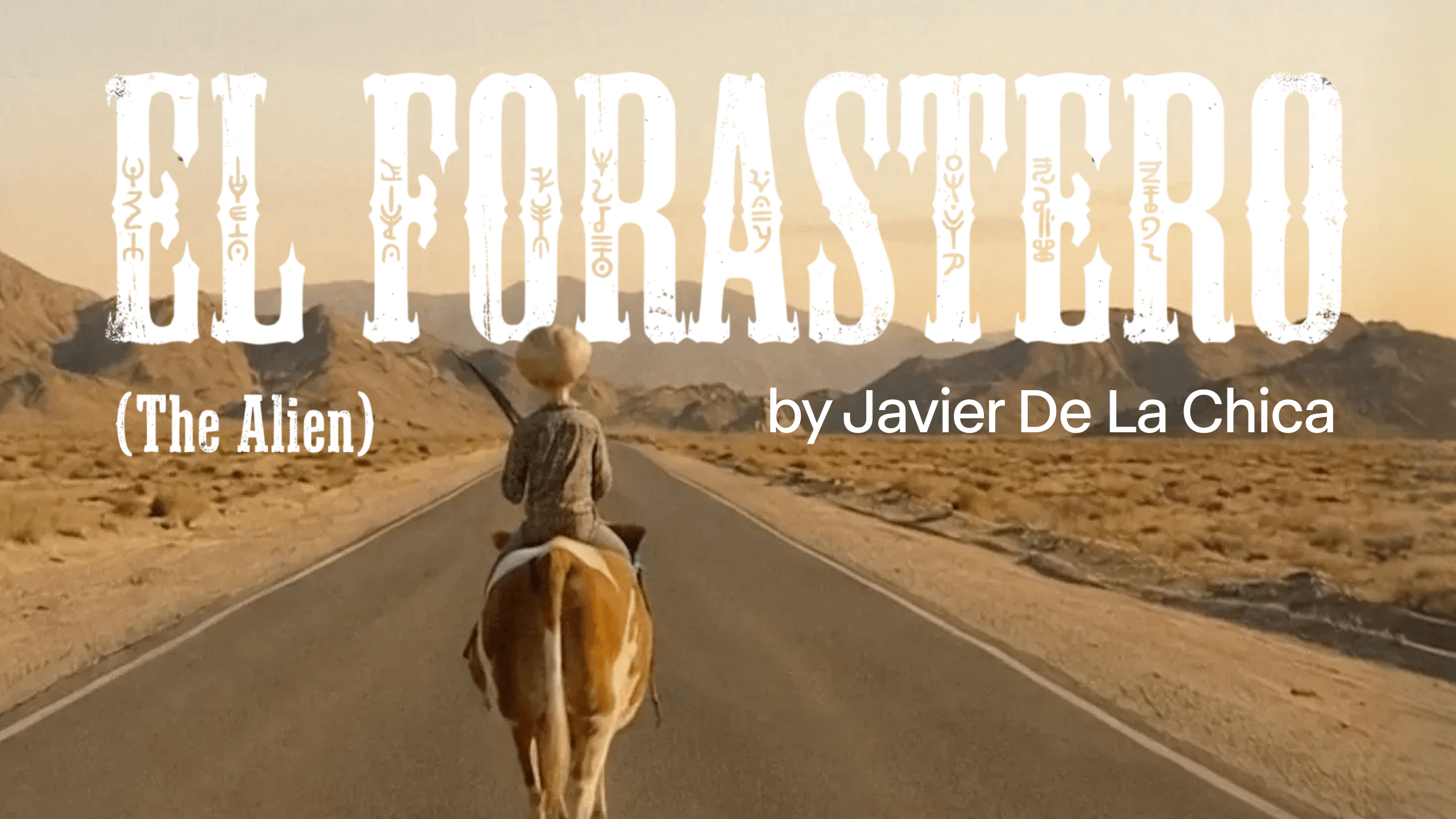
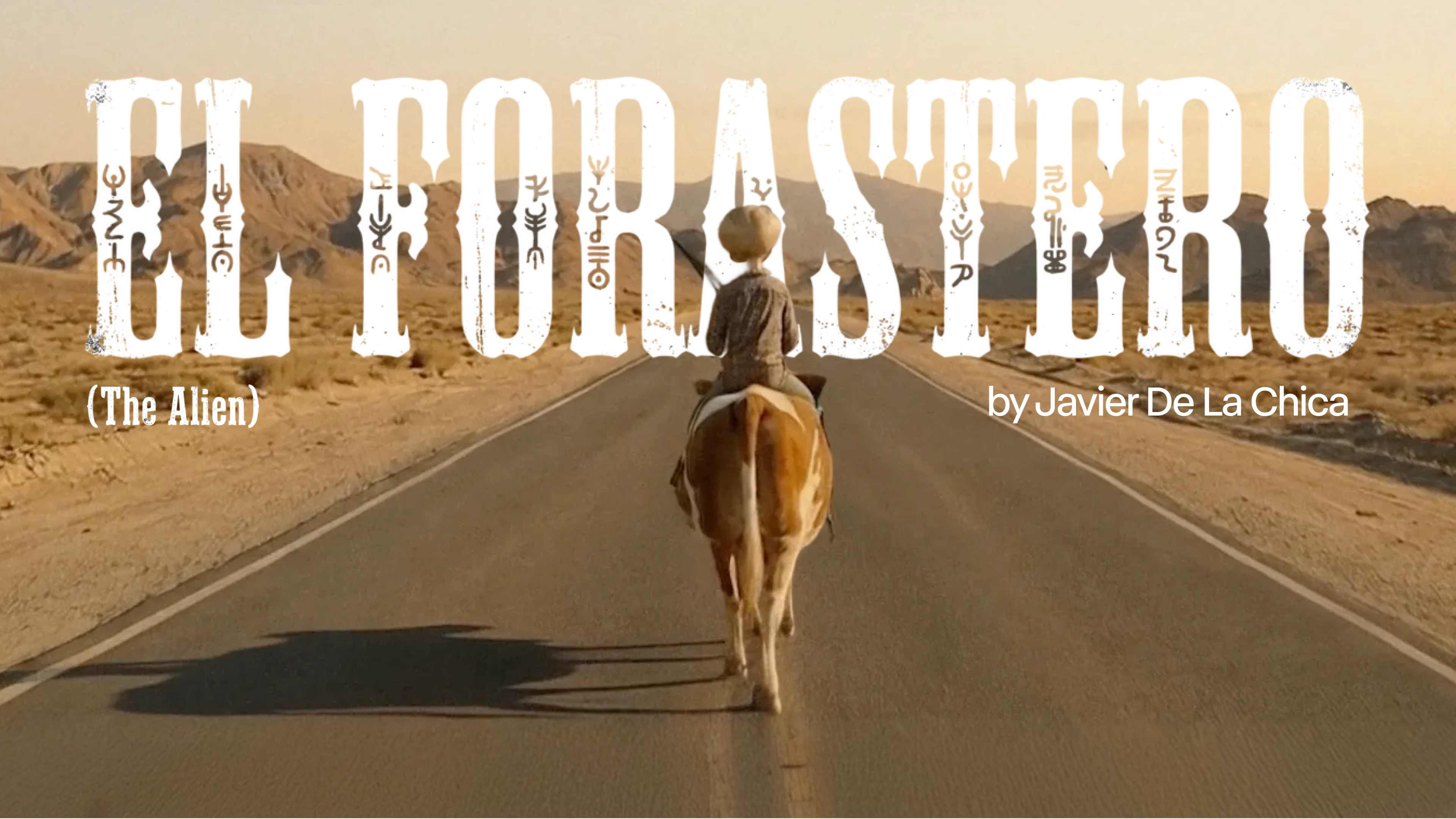
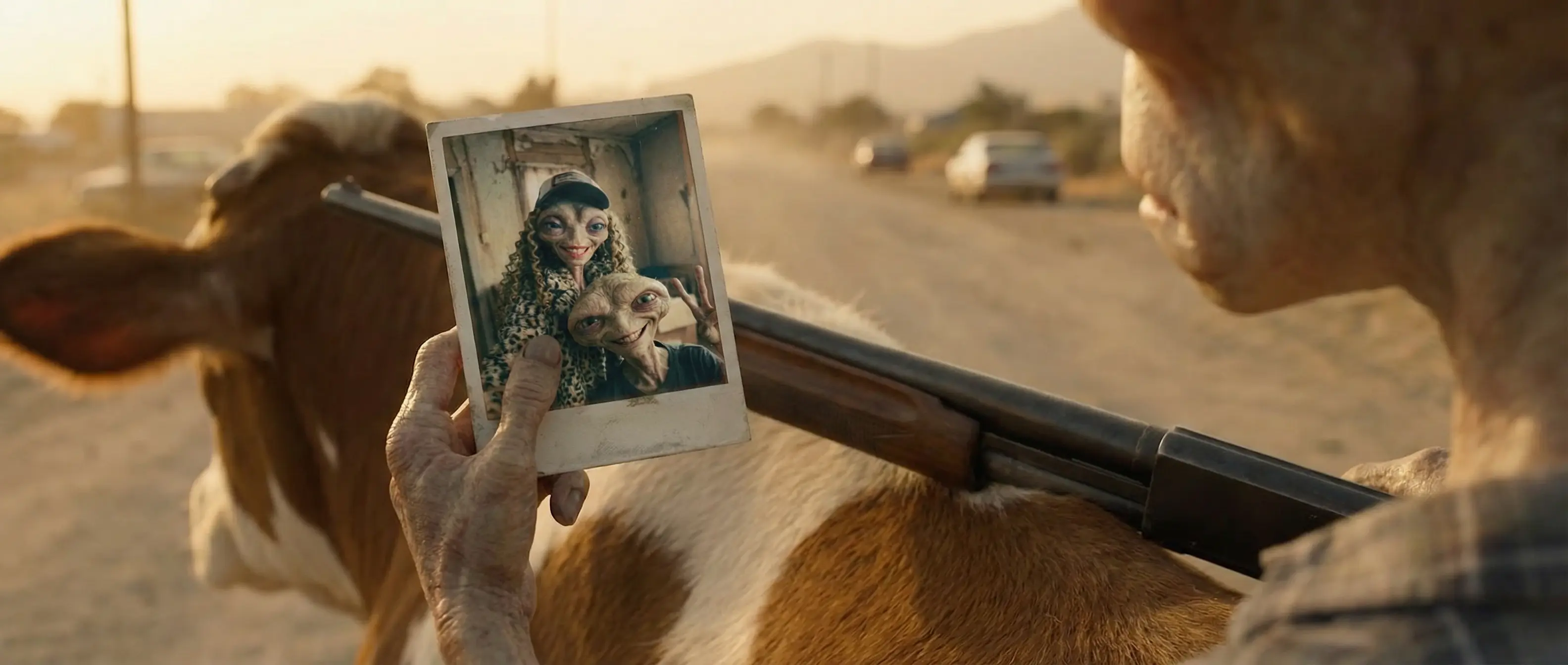
“El Forastero” is a short narrative piece conceived as a concept teaser that hybrids Western and Sci-Fi – genres that have always fascinated me. The main challenge was to build a presentation of a universe, character and conflict/motivation without using dialogues or narrators; in other words, “show, don't tell,” which is the ultimate premise in cinema and especially in animation.
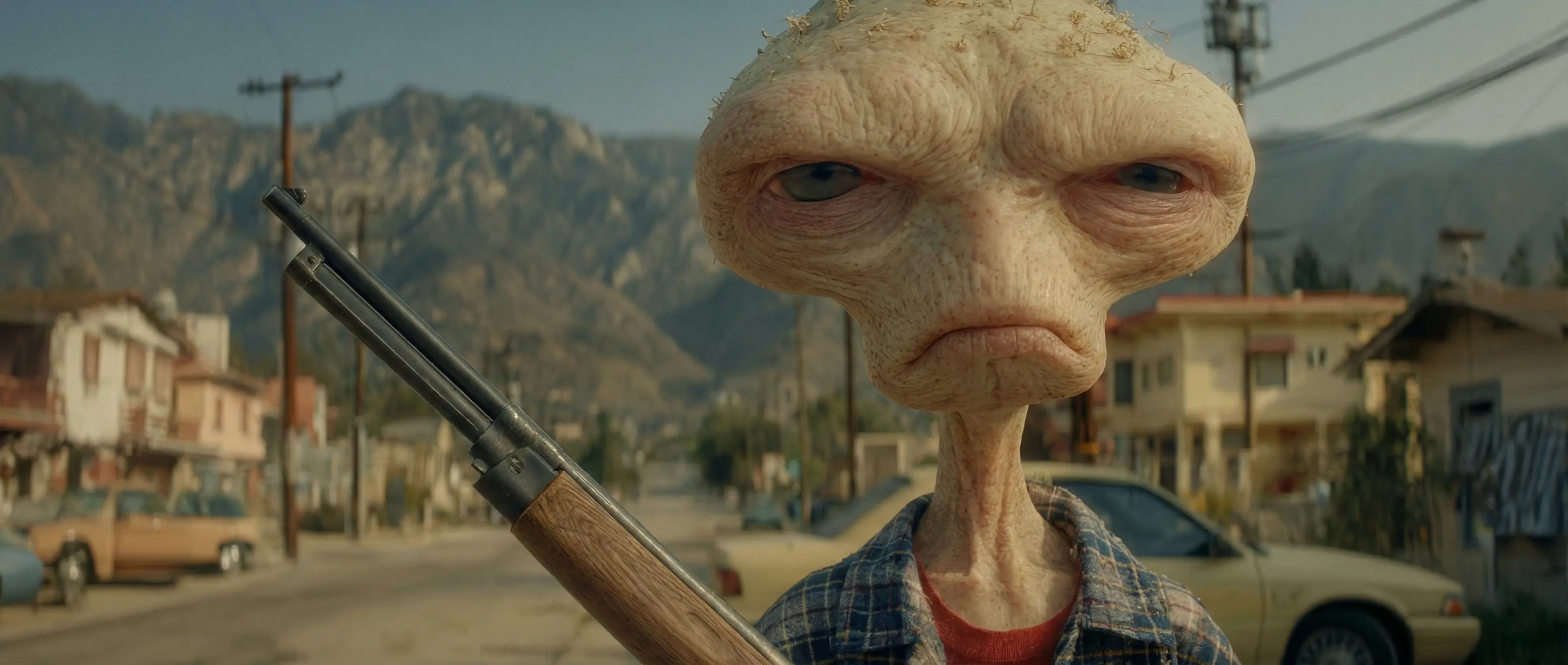
Aesthetically, it is a refined evolution of the “Anirreal” style that characterizes us. We love working with stylized, caricatured and exaggerated characters but treating them with hyper-realistic textures, lighting and photography. This allows us to overcome the uncanny valley that AI can sometimes present. In this case, the environment and the animals are 100% realistic, making the alien feel even more 'alien' by contrast.
Tell us about your creative process – how did you come up with your ideas, and how did Runway’s tools play a role in shaping your workflows?
These types of personal projects usually stem from a visual infatuation. It’s often the union of a strong initial image or music that evokes a specific universe. I spend most of my time in visual exploration, searching for that root image that summarizes the piece's identity: character design, photography, color and treatment.
From there, I use Nano Banana within Runway – it's a huge ally in creating the storyboard I later use to generate the animated shots. I treat these personal projects as an improvisation or a narrative puzzle, where I gradually add layers to the story and visual jokes that emphasize the style and personality. Rhythm is incredibly important to me, and the speed of iteration in Runway allows me to find that specific pulse during the process.
You’ve been around AI filmmaking for a long time now, including Runway's Gen:48 competitions – as the technology has improved, what's been unlocked for you when it comes to telling the stories you want to tell?
Guillermo and I adore Gen:48; it is a sacred weekend for us. It is tremendously demanding, fun and a perfect laboratory for testing technical advances that translate into narrative possibilities. We have participated four times and have the honor of being awarded in three of them. Looking back, it’s impressive how each edition is completely different.
Our first short, “GET BIG,” was essentially a small, music-video-style visual joke. At that time, we didn't have the possibility to do anything more narrative. In “Dale Caña,” the possibility of having more consistent characters and action shots opened up. With “Ausencia,” tools like Aleph and Act-2 allowed us to create a full dialogue sequence, reinforcing acting and emotion. It is impressive how, for our first shorts, we had to unlearn how to make films – now, we are gradually regaining perfected resources that bring us much closer to professional filmmaking.
How did you work with Runway’s tools to get the specific shots you wanted, especially the consistency?
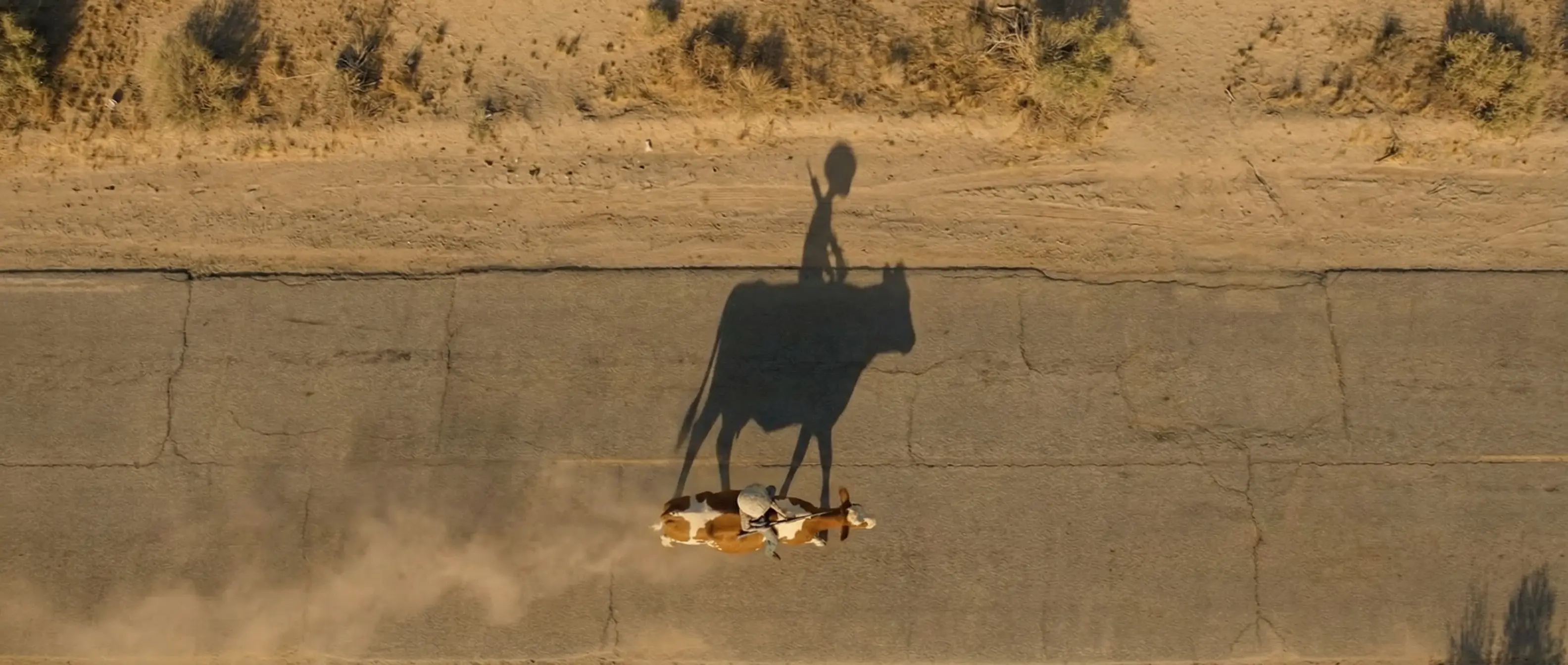
This piece was born from an experiment I did when Gen-4.5 Image-to-Video was released. Toying with some images from my library, I hit upon the idea of the alien pointing at something that would be revealed by the camera movement. I decided it should be a cow. Starting from a frame of the alien, the camera revealed a practically perfect brown cow – one of those magical things Gen-4.5 does.
From that seed shot, the challenge was consistency. Having a tool like Nano Banana integrated into Runway's suite is incredible because I could generate new shots of both characters, creating the exact angles and compositions I wanted. Gen-4.5 has a very natural and realistic way of moving cameras, and that was the new unlocked skill I decided to exploit. I didn't have a full idea in my head, but these tools allowed me to pull the thread, fall in love with the piece and extract a story.
How has AI changed your approach and style when it comes to making films?
While this piece was a personal experiment, I usually work in tandem with my partner Guillermo Miranda. We have a creative synergy that started in university, improvising with guitar and drums. I feel that’s what we do now when we work together. While many productions benefit from large departments, I had never experienced such a direct process between two complementary artists.
Like musical improvisation, this process is tremendously intuitive; the relationship with your eye and judgment is direct. The caricatured aesthetic we use is one in which I feel deeply reflected as an artist. I have always drawn this way – grotesque and exaggerated. It is profoundly satisfying to achieve images made from text in which I truly see my own signature. The iteration process is so direct that you eventually find something that truly reflects who you are.
What’s next for you – what other stories do you want to tell?
We are currently working on several projects, both our own and for third parties. The goal is to continue creating our universes in larger formats like series or feature films. I would love to explore the next stop for this Alien; we’ve already worked on some ideas.
I’m eager to take on a more serious, long-form, and controlled project. I want to reunite with traditional artists—storyboard artists, concept artists, 3D artists—focusing on small, solid, well-chosen teams to build hybrid workflows between AI and traditional animation. I believe there is a golden opportunity to emphasize the value of both traditional and AI artists, always putting an exciting story in the middle.